How to Structure a SMSF to Purchase Property Post 2026 Budget

What the new borrowing rules mean for property investors,
and the strategies still available.
The 2026 Federal Budget has fundamentally changed how Australians can use a Self-Managed Super Fund (SMSF) to invest in property.
Following the Federal Government's tax reforms, new residential property borrowing through an SMSF is now prohibited, while existing arrangements are generally grandfathered. Commercial property borrowing is unaffected. Investors can still participate in residential property through structures like a unit trust or a multi-SMSF partnership, where borrowing happens outside the fund rather than inside it.
For investors who were planning to build wealth through property inside super, the strategy now requires far more careful planning, but it hasn't disappeared.
What Changed After the 2026 Budget?
The key changes are:
- SMSFs can no longer establish new Limited Recourse Borrowing Arrangements (LRBAs) to purchase residential property.
- Existing residential SMSF loans are generally unaffected and can continue as grandfathered arrangements.
- Borrowing to purchase eligible commercial property through an SMSF continues under current legislation.
Fortunately, alternative structures exist depending on your circumstances.
Strategy 1: Using a Unit Trust Structure
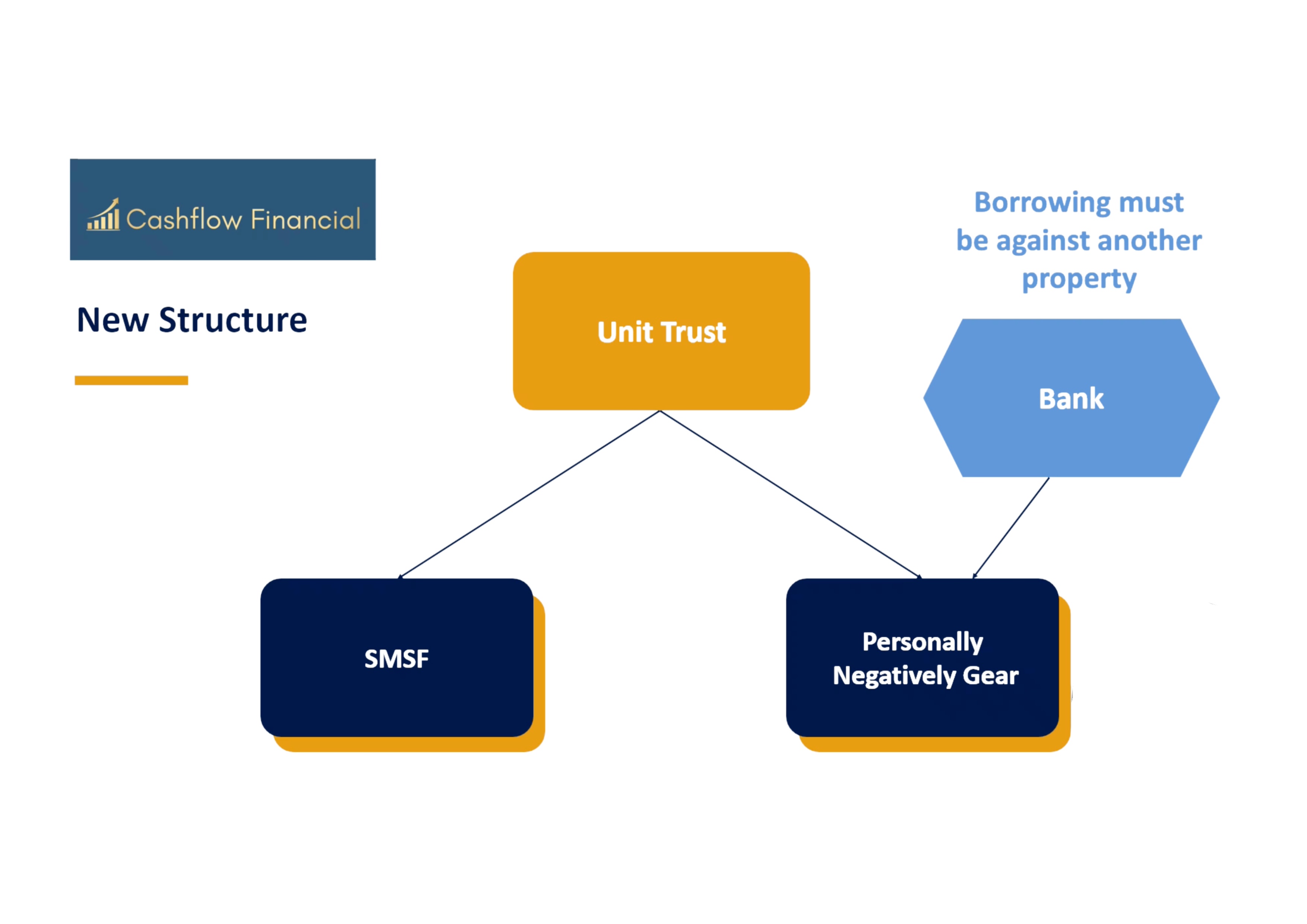
One structure now being considered by experienced advisers is the unit trust. Under this approach:
- The SMSF purchases units in a unit trust.
- The investor personally purchases the remaining units.
- The residential property is held inside the unit trust.
- Any required borrowing occurs personally, rather than inside the SMSF.
In simple terms: the SMSF owns part of the units, the individual investor owns the rest, personal borrowing funds the individual's share, and the SMSF itself does not borrow. This allows retirement savings and personal investment capital to participate in the same underlying property while avoiding new residential borrowing inside the SMSF.
As with all SMSF strategies, careful legal and taxation advice is essential to ensure the structure complies with superannuation law, trust law and ATO requirements.
Potential Benefits of a Unit Trust Structure
- Personal negative gearing: where permitted under current tax legislation, the personally owned portion may still provide access to negative gearing outcomes.
- Residential property investment remains possible: even though SMSFs can't borrow directly, investors may still participate through an appropriately structured ownership arrangement.
- Lower establishment costs: compared with more complex structures, a unit trust can offer a relatively straightforward ownership model.
- Faster growth inside the SMSF: because the SMSF itself carries no debt, investment returns aren't reduced by loan interest, potentially allowing retirement savings to compound more efficiently.
- No property transfer required: once personal borrowings are repaid, there may be no need to transfer ownership between entities, avoiding unnecessary stamp duty and legal costs.
Every investor's circumstances are different, so these potential benefits should always be assessed alongside taxation, cash flow and estate planning considerations.
Strategy 2: Partnership or Unit Trust Between SMSFs
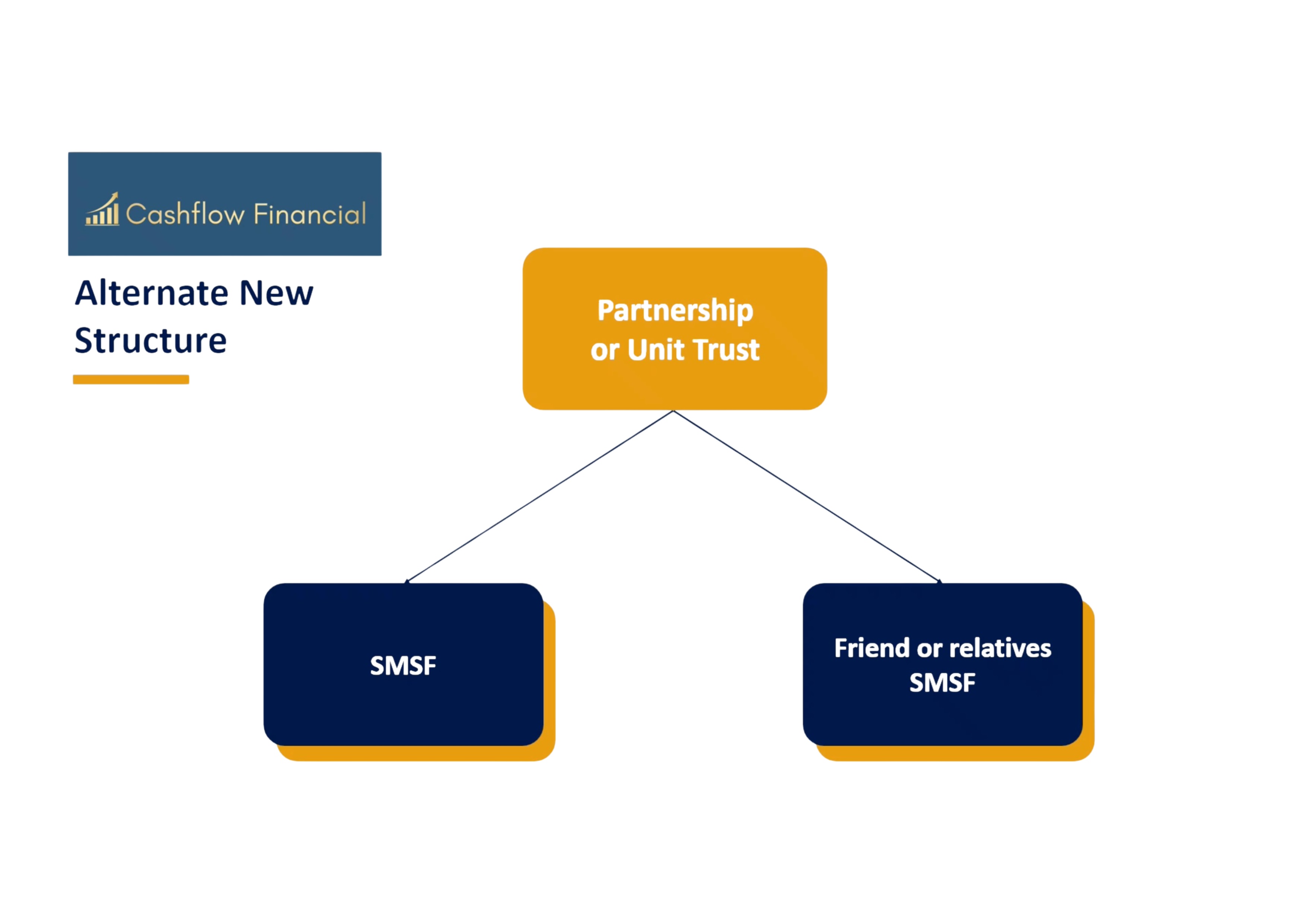
Another possible structure involves a partnership or unit trust owned by two separate SMSFs, for example, your SMSF and a family member's or trusted friend's SMSF. This allows multiple SMSFs to jointly invest in property without requiring new residential borrowing inside any individual super fund.
These arrangements require specialist advice because they involve:
- Trust deeds
- Investment strategies
- Related-party rules
- Valuation requirements
- Liquidity considerations
- Exit planning
When implemented correctly, this structure may provide another pathway for long-term property investment within super.
Is This Strategy Right for You?
The 2026 Budget hasn't ended SMSF property investing, but it has changed how investors need to approach it. Today's successful investors are focusing less on borrowing inside super, and more on:
- Choosing the right ownership structure
- Maximising tax efficiency
- Protecting retirement savings
- Planning for long-term wealth creation
Because these strategies involve complex taxation and superannuation legislation, they should never be implemented without professional advice. An experienced adviser can determine whether a unit trust, partnership arrangement, or another ownership structure aligns with your investment goals while remaining fully compliant with current legislation.
Frequently Asked Questions
Can an SMSF still borrow to buy residential property in 2026? No. Following the 2026 Federal Budget, SMSFs can no longer establish new Limited Recourse Borrowing Arrangements to purchase residential property.
What happens to existing SMSF property loans? Existing residential SMSF borrowing arrangements are generally grandfathered and can continue as normal.
Can an SMSF still borrow for commercial property? Yes. The changes only affect new residential property borrowing. Commercial property borrowing through an SMSF remains available under current legislation.
How can I still invest in residential property through my SMSF? Structures such as a unit trust, where the SMSF and the investor each hold units and any borrowing happens personally rather than inside the fund, or a partnership between multiple SMSFs, may allow continued participation in residential property.
Is a unit trust structure right for everyone? Not necessarily. It depends on your financial circumstances, tax position, and long-term goals. Specialist SMSF and taxation advice is essential before implementing any of these structures.
Speak with Cashflow Financial
If you're considering purchasing property through your SMSF, or want to understand your options following the 2026 Budget, the team at Cashflow Financial can help.
Our experienced accountants and SMSF specialists can review your current structure, explain the latest legislative changes, and help design a compliant strategy tailored to your long-term financial goals. Contact Cashflow Financial today to arrange a consultation and discover the most effective property investment structure for your circumstances.